I Want to Taste You Again Like a Secret or a Sin Lyrics
Hate the Sin, Non the Book
Reading works from the by can offer perspective—even when they say things nosotros don't want to hear.
About the author: Alan Jacobs is a professor of humanities at Baylor University.
This might seem a very strange time to publish a book recommending that we read the voices from the past. Afterward all, isn't the nowadays hammering at our door rather violently? There'southward a worldwide pandemic; a presidential election is most to eat the attention of America; and if all that weren't sufficient, we are entering hurricane season. The present is keeping us plenty busy. Who has time for the past?
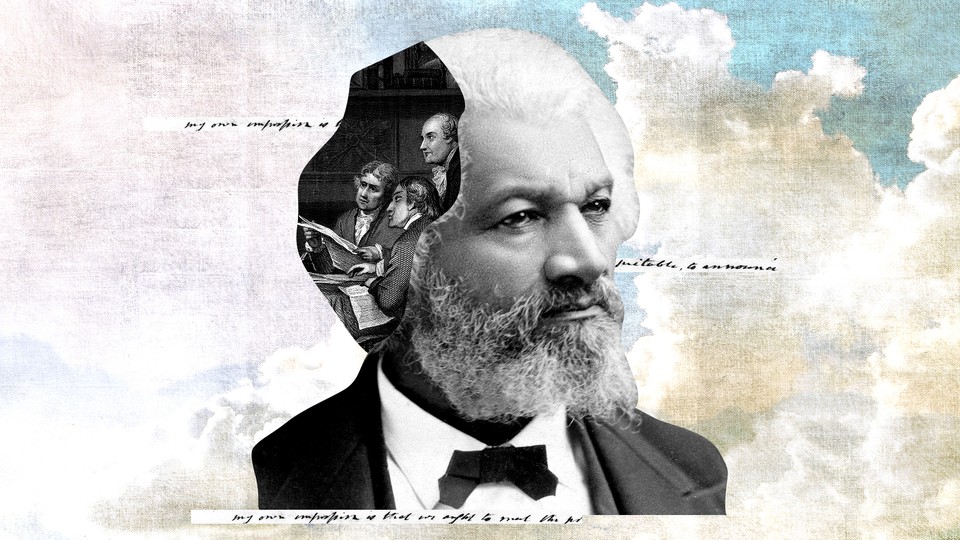
Just my statement is that this is precisely the kind of moment when nosotros demand to take some time to pace back from the burn down hose of alarming news. (When I first tried to type fire hose, I accidentally typed dire hose instead. Indeed.) Every bit we try to manage our dispositions, we need two things. Showtime, we need perspective; second, we demand tranquillity. And information technology's voices from the past that tin can requite us both—even when they say things we don't want to hear, and when those voices belong to people who take washed bad things. One of the best guides I know to such an encounter with the by is Frederick Douglass, an escaped slave, America's well-nigh passionately eloquent advocate for the abolitionism of slavery.
In Rochester, New York, on July 4, 1852, Douglass gave a speech chosen "The Significant of July Fourth for the Negro," and it is equally fine an example of reckoning wisely with a troubling past as I take ever read. He begins by acknowledging that the Founders "were great men," though he immediately goes on to say, "The point from which I am compelled to view them is not, certainly, the nigh favorable; and yet I cannot contemplate their great deeds with less than admiration." Yes: Douglass is compelled to view them in a disquisitional light, because their failure to eradicate slavery at the nation'south founding led to his own enslavement, led to his being beaten and abused and denied every human right, forced him to live in bondage and in fear until he could at long last make his escape. Withal, "for the good they did, and the principles they contended for, I volition unite with you to honor their retentiveness."
What, for Douglass, made the Founders worthy of honor? Well, "they loved their country amend than their own private interests," which is good; though they were "peace men," "they preferred revolution to peaceful submission to bondage," which is very good, and indeed true of Douglass himself; and "with them, nothing was 'settled' that was not right," which is excellent. Maybe all-time of all, "with them, justice, liberty and humanity were 'final'; not slavery and oppression." Therefore, "y'all may well cherish the memory of such men. They were great in their twenty-four hour period and generation."
In their day and generation. But what they achieved, though astonishing in its time, tin can no longer be deemed adequate. Indeed, it never could have been so accounted, considering they did not live up to the principles they then powerfully historic. They appear a "concluding"—that is, an absolute, a nonnegotiable—commitment to justice, liberty, and humanity, but fifty-fifty those who did not own slaves themselves negotiated away the rights of Black people. And so Douglass must say these edgeless words: "This Fourth July is yours, non mine. You may rejoice, I must mourn."
I wonder whether I can even imagine what it toll Douglass to speak as warmly as he did of the Founders. In his autobiography, he describes a moment when he was 12 years old and came across a book containing a fictional dialogue between a slave and his owner. "The more than I read, the more I was led to abhor and detest my enslavers. I could regard them in no other calorie-free than a band of successful robbers, who had left their homes, and gone to Africa, and stolen us from our homes, and in a strange land reduced us to slavery. I loathed them every bit beingness the meanest as well as the most wicked of men." The Founders could not accept been exempt from this loathing: Afterward all, many of them owned slaves, and others tolerated their slave-owning, They deserved denunciation no less than the men who had claimed ownership of Douglass. And nonetheless, in his Rochester oral communication, he conquered his indignation sufficiently to say: "They were keen in their day and generation."
Decades ago, I read an essay by a feminist literary critic named Patrocinio Schweickart about how feminists should read misogynistic texts from the by. She counseled them to face the misogyny but as well to look for what she called the "utopian moment" in such texts, an "authentic kernel" of homo experience that can be shared and celebrated. I think that'south what Douglass does. He has every reason, given what their sins and follies cost him and his Blackness sisters and brothers, to dismiss the Founders wholly, but he does not. "They were peachy in their day and generation."
It would be utterly unfair to demand of anyone wounded as Douglass was wounded the clemency he exhibits here. I would non ever dare to ask it. That he speaks as warmly of the Founders as he does strikes me equally lilliputian less than a miracle. But this fair-mindedness was integral to Douglass's massive success as an orator, as a persuader of the half-convinced and the faint of heart. He knew how to sift, to appraise, to return and reverberate once again. The idealization and demonization of the past are equally easy, and immensely tempting in our tense and frantic moment. What Douglass offers instead is a model of negotiating with the by in a mode that gives charity and honesty equal weight. This is why I say that, when confronted past the sins of the by, Frederick Douglass should be our model.
Reading those figures from the past, fifty-fifty when he disagreed strongly with them, gave him some perspective on his own moment, and, considering they left this vale of tears, some tranquility as well. After all, the expressionless don't talk dorsum to us—unless we invite them to. Nosotros control the encounter. We determine whether to pay our ancestors attending.
When we brand that payment, when nosotros plow aside from the "dire hose" and take a few deep breaths and enter into the world of the past, we tin calm our pulse a fleck, accept time to recollect. No i demands annihilation of usa. Those figures from the past are willing to speak to united states of america when we are willing to listen. They may sometimes speak words of offense, merely they may also speak words of wisdom that we either never know or take forgotten.
Two thousand years ago, the Roman poet Horace wrote a verse letter to a friend. "Interrogate the writings of the wise," he advised, "Asking them to tell you how y'all can / Get through your life in a peaceable tranquil mode." It was skillful advice then and it's practiced advice now.
This post is adjusted from Jacobs'southward recent book, Breaking Bread With the Expressionless: A Reader's Guide to a More Tranquil Mind.
spanglertatem1966.blogspot.com
Source: https://www.theatlantic.com/ideas/archive/2020/09/hate-sinner-not-book/616066/
0 Response to "I Want to Taste You Again Like a Secret or a Sin Lyrics"
Kommentar veröffentlichen